
What happens in the first 90 days of testosterone replacement therapy?
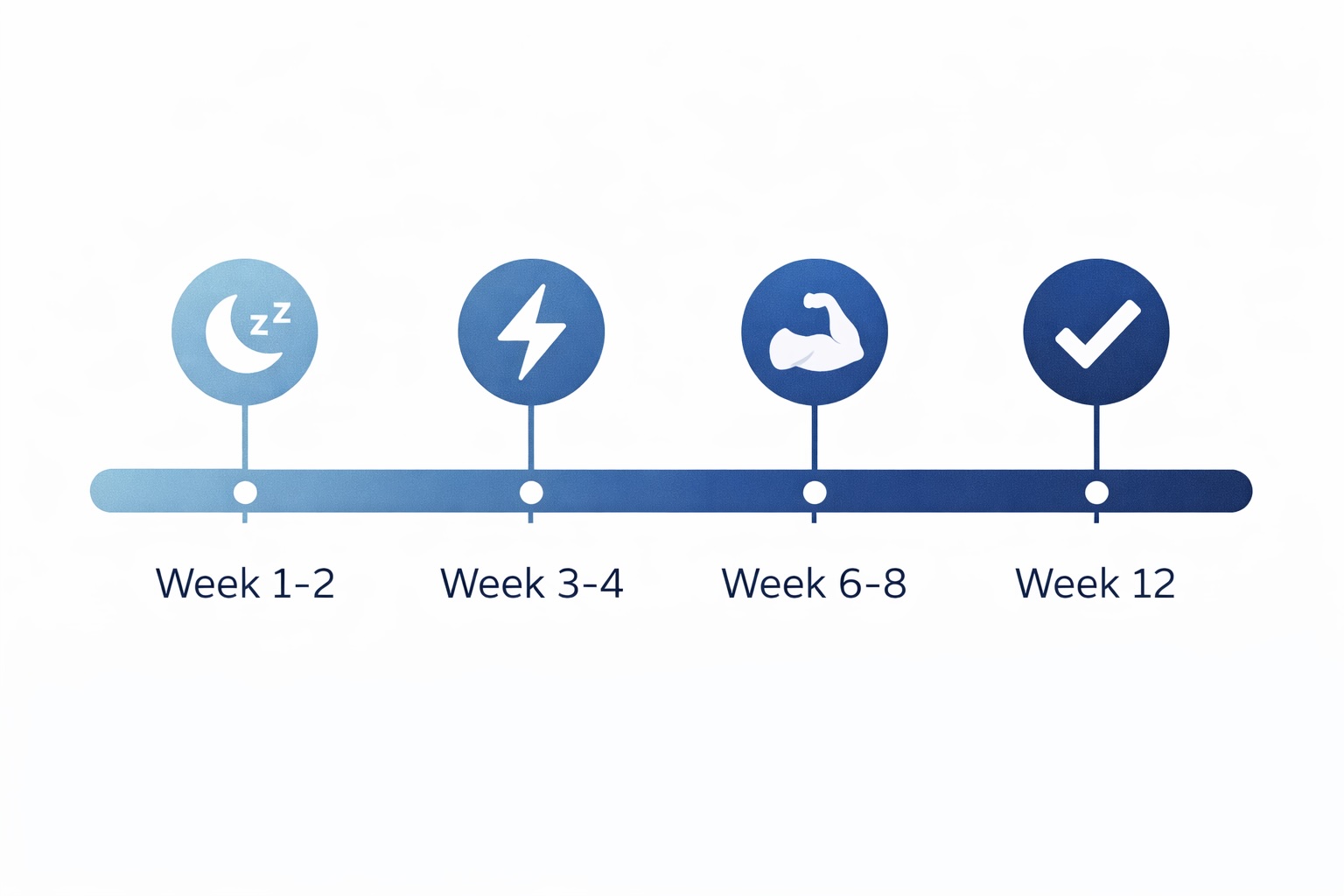
The first 90 days of TRT follow a predictable pattern: sleep and mood improvements within 1-2 weeks, energy increases around week 3-4, body composition changes beginning at week 6-8, and optimal benefits typically appearing around the 12-week mark with proper dosing and monitoring.
The Gap Between Expectations and Reality
You’ve done the research, watched the testimonials, and finally committed to testosterone replacement therapy. Now comes the waiting, and this is where most men struggle. The internet is full of dramatic before-and-after transformations, but rarely does anyone discuss the messy middle, those first 90 days when your body is adjusting and occasionally making you wonder if this was the right decision.
Understanding the realistic timeline prevents the disappointment that leads many men to quit too early or make unnecessary dosing changes before their body has time to adapt.
Week 1-2: The Subtle Shifts
Don’t expect fireworks. The first two weeks typically bring subtle changes that you might not even notice unless you’re paying attention. Some men report absolutely nothing during this period, and that’s completely normal.
Sleep quality often improves first. Many men report deeper, more restful sleep within the first week, waking less frequently during the night or feeling more refreshed in the morning. Testosterone plays a role in sleep architecture, and restoring proper levels begins improving sleep patterns almost immediately.
Mood shifts can appear surprisingly early. Not euphoria or dramatic personality changes, but a subtle reduction in irritability or slightly better stress tolerance. These changes are often so gradual that partners or close friends notice before you do.
Some men experience what feels like a minor energy dip during week one. This isn’t a sign that treatment is failing. Your hypothalamic-pituitary-gonadal axis is recognizing external testosterone and beginning to adjust its own production. This temporary adjustment creates a brief period where you feel slightly off before things stabilize.
Week 3-4: Energy Returns
Around week three, most men hit a noticeable shift. Energy levels that have been dragging for months or years start improving. This isn’t sudden caffeine-like stimulation but rather a steady return of baseline energy that makes getting through the day feel less exhausting.
You’ll likely notice this first in the afternoon. That 2 PM crash that used to require another coffee becomes less severe. You might find yourself volunteering for activities you would have declined a month ago because your body actually has the energy reserves to support it.
Morning motivation often improves during this window. The mental resistance to getting out of bed, starting work, or beginning a workout decreases. This isn’t about discipline; it’s your brain finally having adequate hormone signaling to support motivation and drive.
Sexual function changes begin appearing for many men during weeks three to four. Morning erections may return or become more consistent. Libido, which might have been dormant for years, often shows its first signs of recovery.
Week 6-8: Body Composition Shifts Begin
The six-week mark often brings the first visible physical changes, though they’re subtle enough that you might question whether you’re imagining them. Body composition improvements require time because muscle protein synthesis and fat metabolism don’t change overnight.
Strength improvements in the gym typically appear before visible muscle growth. Lifts that had plateaued for months start moving up. Recovery between workouts improves, allowing for better training consistency.
Fat distribution begins shifting, particularly in men who had significant visceral fat accumulation. The stubborn belly fat that resisted diet and exercise starts responding. These changes happen slowly, but weekly progress photos often reveal differences that day-to-day mirror checks miss.
Water retention can complicate assessment during this period. Some men experience temporary bloating as their body adjusts to new hormone levels. This typically resolves as estrogen levels stabilize and proper dosing is established.
Week 9-12: Finding Your Stride
The 12-week mark represents a crucial milestone. This is when most testosterone providers schedule comprehensive follow-up blood work to assess how your body has responded and whether adjustments are needed.
Mental clarity and cognitive function improvements often become obvious during this phase. The brain fog that made complex tasks feel overwhelming starts lifting. Focus and concentration improve. Memory recall gets sharper. These cognitive benefits are frequently among the most life-changing aspects that men report.
Mood stabilization solidifies during months two and three. The irritability, anxiety, or depressive symptoms that low testosterone caused often show marked improvement. Stress tolerance increases. Emotional resilience strengthens.
Body composition changes become visible to others by month three. Friends or family members might comment on how you look healthier or more vital. The combination of increased muscle mass and reduced body fat creates a noticeable difference.
Energy levels should feel consistently good rather than the roller coaster many men experienced before treatment. You wake refreshed, maintain steady energy throughout the day, and still have reserves for evening activities.
What Can Derail Your Progress
Several factors can interfere with experiencing the full benefits during your first 90 days.
Inconsistent dosing or administration creates unnecessary variability. Missing doses or irregular timing prevents your body from establishing stable hormone levels. Whether using injections, gels, or other delivery methods, consistency matters enormously.
Inadequate sleep sabotages results. Testosterone replacement can’t overcome chronic sleep deprivation. If you’re only sleeping five hours per night, even optimal testosterone levels won’t produce the energy and recovery benefits you’re seeking.
Poor nutrition undermines progress. Your body needs adequate protein for muscle synthesis and proper nutrients for hormone conversion and utilization. Extreme calorie restriction during the first 90 days can prevent you from experiencing full benefits.
Unrealistic expectations create unnecessary disappointment. If you’re expecting Hollywood transformation after one month, you’ll feel discouraged by normal, healthy progress. Sustainable improvements happen gradually.
The Estrogen Factor Nobody Mentions
Testosterone doesn’t work in isolation. When you increase testosterone, your body also increases aromatase enzyme activity, which converts some testosterone to estradiol (estrogen). This conversion is normal and necessary for male health, including libido, bone density, and cardiovascular protection.
However, some men convert testosterone to estrogen more aggressively than others. High estrogen symptoms during the first 90 days can include water retention, sensitive nipples, emotional sensitivity, or difficulty achieving erections despite adequate testosterone levels.
This doesn’t mean you need to immediately start estrogen blockers. Many men’s estrogen levels stabilize naturally as their body adjusts. Work with your provider to find the right balance through careful monitoring and targeted intervention only when necessary.
When to Contact Your Provider
Most adjustment symptoms resolve on their own, but certain signs warrant reaching out to your healthcare provider before your scheduled follow-up.
Severe or persistent headaches, especially if they’re new or different from your normal patterns, deserve evaluation. Chest pain, shortness of breath, or other cardiovascular symptoms require immediate medical attention.
Mood changes that feel concerning, particularly severe anxiety, depression, or anger that seems out of proportion, should be discussed with your provider. Testosterone optimization should improve mood, not destabilize it.
Physical symptoms like persistent painful erections, severe acne that doesn’t respond to basic skincare, or significant swelling in the extremities all warrant medical consultation.
The 90-Day Checkpoint
Three months into testosterone replacement therapy represents a natural evaluation point. By this time, you should have experienced noticeable improvements in at least some areas: energy, sleep, mood, body composition, or sexual function.
If you’re seeing absolutely no changes after 90 days of consistent treatment, something needs adjustment. This might mean dosage changes, switching delivery methods, addressing estrogen levels, or investigating other health factors that could be interfering with results.
For most men who stick with treatment through the initial adjustment period, month three brings a clear realization that this was the right decision. Energy, strength, mental clarity, and overall quality of life show measurable improvements.
Setting Realistic Expectations
The first 90 days of testosterone replacement won’t transform you into a different person. You’ll still be you, just a better-functioning version with the energy and vitality to actually pursue the life you want.
Most men wish they had started sooner once they experience the difference proper testosterone levels make. The key is approaching treatment with patience, following your protocol consistently, communicating with your provider about your progress, and giving your body the time it needs to adapt.
Testosterone replacement therapy works, but it works on a biological timeline that can’t be rushed. Understanding what to expect during your first 90 days prevents disappointment, helps you recognize normal adjustment symptoms, and allows you to appreciate the gradual improvements that compound into significant long-term benefits.
This information is for educational purposes only and does not constitute medical advice. Testosterone replacement therapy requires ongoing medical supervision. Consult with a qualified healthcare provider about your individual situation.