
How does sleep affect testosterone levels in men?
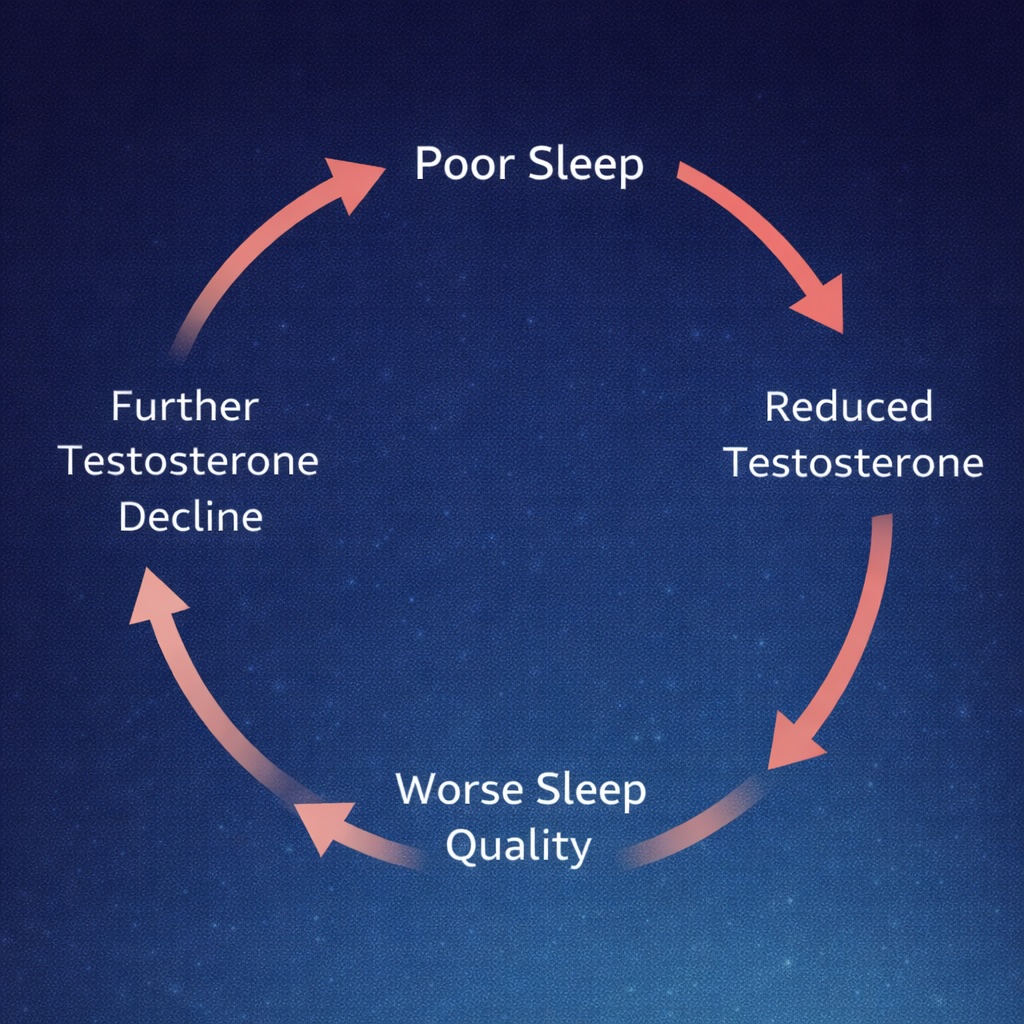
Sleep directly controls testosterone production. Men produce 60-70% of their daily testosterone during deep sleep stages. Getting less than 5 hours of sleep can reduce testosterone levels by 10-15% within one week, creating a cycle of hormonal decline.
The Hidden Sleep Crisis Destroying Male Hormones
You’re exhausted by 2 PM. Your workout recovery takes twice as long as it used to. Your sex drive has quietly disappeared. You assume it’s just age, stress, or maybe you need more coffee.
The real culprit might be happening while you sleep, or more accurately, while you’re not sleeping well enough.
Most men over 40 don’t realize that sleep and testosterone share a biochemical relationship so tight that damaging one automatically sabotages the other. It’s a vicious cycle that conventional medicine rarely addresses, leaving millions of men stuck in a downward spiral of declining hormones and deteriorating sleep quality.
Why Testosterone Production Happens During Sleep
Your body isn’t randomly producing testosterone throughout the day. The bulk of testosterone synthesis occurs during specific sleep stages, particularly during REM (rapid eye movement) sleep and the deeper stages of non-REM sleep.
Research from the University of Chicago found that men who slept only 5 hours per night for one week experienced a 10-15% drop in testosterone levels. That’s equivalent to aging 10-15 years in just seven days of poor sleep.
The hypothalamic-pituitary-gonadal axis, your body’s hormone control center, relies on circadian rhythms to time testosterone production. When sleep patterns fragment or shorten, this axis doesn’t receive proper signals to maintain healthy hormone levels. The result is a measurable decline in both total and free testosterone.
The Vicious Cycle: Low Testosterone Destroys Sleep Quality
Here’s where it gets worse. Low testosterone doesn’t just result from poor sleep; it also causes poor sleep quality, creating a self-perpetuating cycle that’s difficult to break without intervention.
Men with clinically low testosterone experience higher rates of sleep apnea, insomnia, and disrupted sleep architecture. Testosterone influences upper airway muscle tone, so low levels can contribute to airway collapse during sleep. This leads to sleep apnea, which further reduces testosterone production.
The cycle works like this: Poor sleep reduces testosterone, low testosterone worsens sleep quality, worse sleep further reduces testosterone. Each rotation of this cycle makes the problem more entrenched.
What’s Really Happening After Age 40
Starting around age 30, men’s testosterone levels naturally decline by approximately 1% per year. By age 40, you’ve lost roughly 10% of peak testosterone. Simultaneously, sleep architecture begins to change.
Deep sleep stages become shorter and less frequent. You spend more time in lighter sleep stages that don’t trigger the same hormonal responses. REM sleep, crucial for testosterone production, becomes fragmented. Even if you’re sleeping 7-8 hours, the quality of that sleep has deteriorated.
The Journal of Clinical Endocrinology & Metabolism published findings showing that total sleep time matters less than sleep efficiency for testosterone production. Men who spent 8 hours in bed but had fragmented sleep showed lower testosterone levels than men who slept solidly for 6.5 hours.
Sleep Apnea: The Silent Testosterone Killer
Nearly 30% of men over 40 have undiagnosed sleep apnea, a condition where breathing repeatedly stops during sleep. Each apnea episode triggers a stress response, flooding your system with cortisol while simultaneously interrupting the deep sleep stages necessary for testosterone production.
Sleep apnea creates a perfect storm for hormonal destruction. The repeated oxygen deprivation stresses your cardiovascular system, the fragmented sleep prevents adequate testosterone production, and the resulting daytime fatigue makes exercise and healthy lifestyle choices nearly impossible.
The National Sleep Foundation reports that men with moderate to severe sleep apnea can have testosterone levels 25% lower than men without sleep disorders. Treating sleep apnea often leads to measurable improvements in testosterone levels within weeks.
Cortisol: The Testosterone Antagonist
Poor sleep doesn’t just reduce testosterone production; it actively elevates cortisol, the stress hormone that directly suppresses testosterone synthesis. When sleep deprivation becomes chronic, your body maintains elevated cortisol levels throughout the day and night.
Cortisol and testosterone exist in an inverse relationship. When one goes up, the other typically goes down. Chronic sleep deprivation keeps cortisol elevated, which signals your body to reduce testosterone production as part of its stress response.
This hormonal imbalance affects far more than energy and libido. Elevated cortisol combined with low testosterone accelerates muscle loss, increases fat storage (particularly visceral fat around your midsection), impairs cognitive function, and increases cardiovascular disease risk.
Practical Solutions: Breaking the Cycle
The good news is that addressing either side of this equation can create positive momentum. Improving sleep quality can boost testosterone, and optimizing testosterone can improve sleep. Here’s what actually works:
Prioritize Sleep Consistency Going to bed and waking at the same time every day, including weekends, helps regulate your circadian rhythm and optimize the hormonal production schedule. Even one late weekend night can disrupt this pattern for days.
Optimize Your Sleep Environment Keep your bedroom completely dark. Even small amounts of light can suppress melatonin production and disrupt deep sleep stages. Temperature matters too; studies show that 65-68°F promotes better sleep architecture than warmer temperatures.
Address Sleep Apnea Aggressively If you snore loudly, wake up gasping, or feel exhausted despite adequate sleep time, get evaluated for sleep apnea. CPAP therapy can seem inconvenient, but the testosterone improvements often occur within 4-6 weeks of consistent use.
Manage Evening Light Exposure Blue light from screens suppresses melatonin production and shifts your circadian rhythm later. The National Sleep Foundation recommends avoiding screens for at least one hour before bed, or using blue light blocking glasses if screen use is unavoidable.
Consider Medical Evaluation When lifestyle interventions aren’t enough, medical assessment becomes essential. Comprehensive hormone testing can identify whether low testosterone is contributing to sleep problems, while sleep studies can diagnose disorders like sleep apnea that destroy hormone production.
Modern telehealth platforms have made accessing specialized hormone care easier than ever. Virtual consultations with physicians who specialize in men’s health allow for thorough evaluation without the scheduling conflicts and wait times of traditional medical appointments.
When Lifestyle Changes Aren’t Enough
Some men discover that despite optimizing sleep habits, their testosterone levels remain clinically low. This typically indicates that the hormonal decline has progressed beyond what lifestyle modification alone can address.
Testosterone replacement therapy (TRT), when properly supervised by experienced physicians, can break the cycle by restoring healthy hormone levels. Interestingly, many men report significant sleep quality improvements within weeks of starting TRT, as proper testosterone levels help normalize sleep architecture and reduce sleep apnea severity.
The key is working with providers who understand the interconnected nature of sleep and hormones. Cookie-cutter approaches that address only one side of the equation often fail because they ignore the underlying relationship between these systems.
Taking Action
The relationship between sleep and testosterone represents one of the most underappreciated factors in men’s health after 40. Conventional medicine often treats these as separate issues, prescribing sleeping pills for insomnia and discussing TRT as an unrelated option for low energy or decreased libido.
Understanding that these systems influence each other fundamentally changes the approach to treatment. Optimizing one creates momentum for improving the other. Ignoring this connection guarantees that neither problem will fully resolve.
If you’re experiencing symptoms like chronic fatigue, poor workout recovery, decreased motivation, weight gain despite maintaining your routine, or declining sexual function, the root cause might be happening while you sleep.
Comprehensive evaluation of both sleep quality and hormone levels provides the clearest picture of what’s actually happening in your body. From there, targeted interventions, whether lifestyle modifications, sleep disorder treatment, hormone optimization, or combination approaches, can break the cycle and restore the vitality that gradual decline has stolen.
This information is for educational purposes only and does not constitute medical advice. Consult with a qualified healthcare provider before making decisions about your health or treatment options.